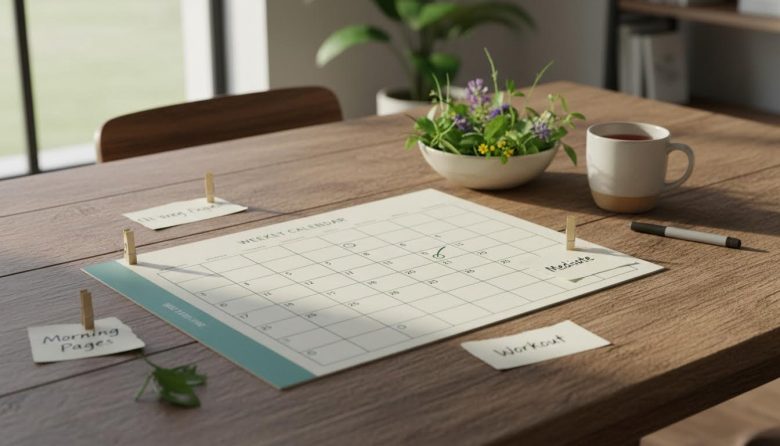
As a dad juggling deadlines and diaper changes, I learned habits stick when they’re bite-sized and weekly-planned. This science-informed plan uses circadian-aligned timing for momentum. It fits busy schedules with 5-10 minute wins that build over the week.
Picture starting your Monday with a quick light exposure ritual instead of forcing a full overhaul. By Friday, small stacks create flow without burnout. Grab a notebook now—jot one habit you want to anchor, and let’s map your week for real progress.
Weekly rhythms match how our brains wire habits through spaced repetition. Daily grinds often lead to overload, but cycling builds neural pathways gently. Parents like us thrive on this structure amid chaos.
Why Weekly Cycles Beat Daily Grind for Habit Formation
Weekly cycles help by strengthening neural pathways via spaced repetition. This approach reduces stress responses compared to relentless daily pushes. It allows recovery time, which aids long-term retention.
Research on habit science shows consistency in bursts often outperforms force. Your brain consolidates gains during off-days, like sleep reinforcing learning. This rhythm tends to boost adherence for busy folks.
Why it helps: Spaced repetition mimics how memory forms—reviewing habits weekly reinforces them without fatigue. It lowers cortisol spikes from overtrying, creating a calmer path to change.
What to try
- Assign theme days: Monday for movement, Wednesday for mindset.
- Preview Sunday nights: 2-minute scan of the week ahead.
- End-week celebrate: Note one win to dopamine-boost motivation.
These 5-minute setups fit anywhere. Test one cycle and track mood shifts.
Monday Momentum: Pick One Anchor Habit to Launch Strong
Kick off with a single anchor like morning light exposure. This resets your circadian rhythm for better energy all week. As a parent, I timed it post-coffee—game-changer for focus.
Why it helps: Light hits the eyes to sync your internal clock, curbing afternoon slumps. It signals “daytime” to your brain, often improving sleep later. Plain mechanism: suppresses melatonin, ramps alertness.
What to try:
- 5-min outdoor walk—step out while sipping water.
- Face a window: 2 mins bright light, deep breaths.
- Anchor to breakfast: Plate-ready timer buzz.
- Pair with gratitude note: Jot one family win.
Safety / when to be cautious: Ease in if low energy—start with 2 minutes. Skip if dizzy; hydrate first.
Transition smoothly: This launch sets flow for stacking later. Building on short walks can amplify it, as in How to Add Short Walks for Daily Light Energy.
Tuesday Through Thursday: Stack Micro-Wins for Flow State
Midweek, layer one micro-action onto Monday’s anchor. Hydration cues or breath breaks build dopamine flow. I slotted these post-meals—kept toddler chaos at bay.
Why it helps: Small stacks release dopamine, fueling motivation without overwhelm. Midweek timing leverages rising energy from Monday’s reset. It trains flow state via compound micro-gains.
What to try:
- Tuesday hydration: Set phone timer for 8oz water hourly.
- Wednesday breath: 1-min 4-7-8 (in 4, hold 7, out 8).
- Thursday stretch: Desk twist, 90 seconds per side.
- Add positive cue: Mirror affirmation during brush.
- Movement stack: 3-min march in place mid-afternoon.
These fit 5-10 minutes total daily. Vary based on your signals—energy dips signal tweaks.
Flow builds here, prepping Friday review. Tie in basics from 10 Easy Habits to Lift Your Daily Energy for extra lift.
Friday Tune-Up: Quick Review to Lock in Progress
End strong with a 5-minute reflection. Scan wins, note tweaks—no judgment. As a trial-error dad, this locked my streaks.
Why it helps: Review consolidates learning, like sleep processing memories. It spots patterns early, adjusting before weekends. Reduces “all or nothing” mindset.
What to try:
- Wins checklist: List 3 micro-victories.
- Tweaks: One change for next week.
- Preview: Anchor habit for Monday.
Safety / when to be cautious: Skip if exhausted—rest trumps review. Resume fresh.
This bridges to recharge. Logical next: Visualize the table below for your snapshot.
| Day | Anchor Habit (5 mins) | Stacked Micro-Action | Track Your Signal (Mood/Energy 1-5) |
|---|---|---|---|
| Monday | Morning light walk | Gratitude note | |
| Tuesday | Light exposure | Hydration timer | |
| Wednesday | Breath break | Desk stretch | |
| Thursday | Movement stack | Affirmation cue | |
| Friday | Review ritual | Wins checklist | |
| Saturday | Nature scan | Family walk | |
| Sunday | Plan preview | Relax read |
A table offers a scannable weekly snapshot that boosts adherence through visual structure. Print or screenshot—check off daily. Track signals honestly for tweaks.
Weekend Recharge: Integrate and Prep for Repeat Wins
Keep it light: Integrate via gentle scans, prep Monday. Low-pressure sustains gains. I used kid park time for this—double win.
Why it helps: Recovery bolsters retention, like rest after workouts. Weekends align with natural dips, preventing burnout. Aids circadian recovery for Monday.
What to try:
- Saturday nature scan: 5-min outdoor sit, notice senses.
- Family tie-in: Shared breath game.
- Sunday preview: 3-min week map.
- Gentle read: Positive routine inspo, 10 mins.
These recharge without push. Connects to beginner routines in Beginner’s Guide to Positive Energy Routines.
Track Smarter, Not Harder: Signals Over Scales
Use phone notes or this table—no fancy apps. Rate mood/energy 1-5 post-habit. Patterns emerge fast.
Experiment one week: Note shifts in sleep, focus. Adjust anchors accordingly. Small data drives big changes.
Timers key: Set recurring 5-min buzzes. Consistency compounds—celebrate week one’s end.
Frequently Asked Questions
Can beginners jump into a full week of habits?
Start with 1-2 days to build confidence; scale as energy allows. This acknowledges variation in starting points. Track simple signals before adding more.
What if I miss a day—does it ruin progress?
One slip often doesn’t derail; restart next cycle without self-judgment. Weekly structure forgives gaps better than daily streaks. Focus on the rhythm returning.
How do I pick habits that actually stick for me?
Test ones tied to pain points like sleep or energy; track 3 days for fit. Personalize via trial— what boosts your signals? Varies by lifestyle, so experiment cautiously.
Is this plan safe for high-stress parents?
May help regulate stress response through micro-breaks; pause if overwhelmed. Consult a doctor for underlying issues. Start slow to gauge tolerance.
How long before I see habit changes?
Tends to show in 2-4 weeks with consistency; individual variation applies. Monitor energy/mood weekly for early signs. Patience pairs with tracking.