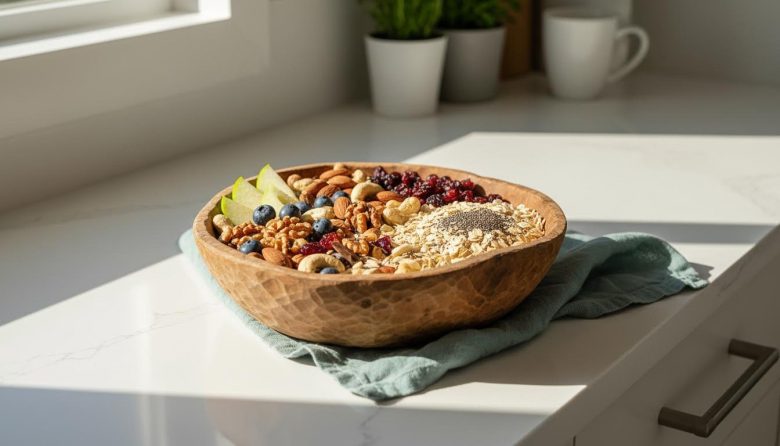
I remember those afternoons when I’d hit a wall around 3 p.m., reaching for coffee or candy just to make it through. My energy dipped hard after quick-sugar breakfasts, leaving me foggy and frustrated. That changed when I started swapping in steady-energy foods like oats and almonds—they kept my blood sugar stable, supporting my natural circadian rhythm for smoother all-day flow.
These seven positive foods work by delivering balanced nutrients: fiber for slow glucose release, proteins and fats for satiety, and key minerals like magnesium for cellular energy production. They help avoid the crashes from processed drainers, often leading to better focus and mood. In this guide, I’ll share the food swap table for quick reference, then dive into each one with why it helps and easy ways to try it.
Preview the lineup: oats for mornings, eggs for stability, almonds for snacks, blueberries for antioxidants, spinach for power, salmon for clarity, and sweet potatoes for evenings. Experiment with a couple this week, tracking your energy and mood in a simple journal. You’ll likely notice shifts that make habits stick.
7 Positive Food Swaps for Sustained Energy
| Common Energy Drainer | Positive Food Swap | Key Nutrient Edge | Quick Incorporation Tip |
|---|---|---|---|
| Sugary cereal | Oats | Soluble fiber for slow glucose release | Overnight oats with yogurt |
| Processed pastry | Eggs | Complete protein for satiety | Boiled eggs with veggies |
| Candy bar | Almonds | Healthy fats to steady blood sugar | Handful as snack |
| Soda | Blueberries | Antioxidants to combat oxidative stress | Add to smoothie |
| Chips | Spinach | Magnesium for ATP production | Salad base or sauté |
| Fast food burger | Salmon | Omega-3s for inflammation reduction | Baked fillet |
| White rice | Sweet potatoes | Complex carbs with vitamins | Baked as side |
1. Oats: Slow-Burning Fuel to Avoid Morning Crashes
Why it helps: Oats contain beta-glucan, a soluble fiber that forms a gel in your gut, slowing glucose absorption to prevent blood sugar spikes and dips. This supports steady energy through your circadian rhythm, often reducing that midmorning slump. Studies show it can improve satiety, helping you stay focused longer.
I swapped sugary cereal for oats and felt my mornings transform—no more crashes before lunch. The fiber also feeds gut bacteria, which may enhance overall vitality.
What to try:
- Make overnight oats: mix ½ cup oats with yogurt and chia seeds, chill overnight for grab-and-go.
- Try savory oats: cook with broth, top with spinach and a poached egg for dinner vibes.
- Roll energy balls: blend oats, almond butter, and dates; chill for snack packs.
- Bake oat muffins with blueberries for batch prep.
- Stir into smoothies for thickness without heaviness.
Safety / when to be cautious: Choose gluten-free oats if you have sensitivities, as cross-contamination can occur. Start with small portions if new to high fiber to ease digestion.
2. Eggs: Versatile Protein for Midmorning Stability
Why it helps: Eggs offer complete protein with all essential amino acids, promoting sustained fullness and stable blood sugar. Choline in the yolk supports neurotransmitter function, which may aid mental clarity during busy mornings. This combo tends to curb hunger better than carb-heavy starts.
One busy week, hard-boiled eggs became my hero—pairing them with veggies kept me energized through meetings without fading.
What to try:
- Scramble with spinach and tomatoes for a quick veggie boost.
- Boil a batch for snacks; peel and store in the fridge up to a week.
- Fold into omelets with herbs and cheese for variety.
- Top avocado toast with a fried egg for fats and protein synergy.
- Blend into muffins or frittatas for meal prep.
For ideas on how to make simple energizing breakfasts at home, eggs fit perfectly into light, quick routines that sustain you.
Safety / when to be cautious: Cook eggs thoroughly to avoid salmonella risk, especially for vulnerable groups. Limit if you have high cholesterol concerns, but most tolerate 1-2 daily.
3. Almonds: Portable Fats for Blood Sugar Balance
Why it helps: Monounsaturated fats in almonds slow digestion, steadying blood sugar and preventing energy dips. Vitamin E acts as an antioxidant, potentially reducing oxidative stress from daily demands. This makes them ideal for on-the-go stability.
Stashing almonds in my bag turned afternoon candy cravings into calm focus—I’d munch a handful and power through.
What to try:
- Grab a 1-oz handful plain as a desk snack.
- Mix into trail mix with seeds and dried fruit, no sugar added.
- Spread almond butter on apple slices for sweet crunch.
- Blend into smoothies for creaminess.
- Roast lightly with spices for flavored bites.
Pairing almonds with 5 tips for light meals that energize creates balanced, portable options that keep your rhythm steady.
Safety / when to be cautious: Stick to 1 oz (about 23 nuts) to manage calories; chew well to avoid choking on whole nuts.
4. Blueberries: Berry Antioxidants Against Afternoon Fatigue
Why it helps: Polyphenols in blueberries may protect cells from oxidative stress, which builds up during the day and contributes to fatigue. Their low glycemic index supports even energy without spikes. This can help combat that post-lunch lull.
Frozen blueberries saved my slumpy afternoons—they’re like nature’s pick-me-up in yogurt.
What to try:
- Add a handful to morning smoothies for purple power.
- Top Greek yogurt or oats for natural sweetness.
- Freeze as popsicles with coconut water for treats.
- Mix into salads for tangy bursts.
- Bake into oat bars for portable snacks.
When your energy flags, blueberries pair well with how to use deep breathing for instant energy boosts to amplify calm focus.
No major cautions here—berries are gentle for most, but rinse fresh ones well.
5. Spinach: Leafy Magnesium Boost for Cellular Power
Why it helps: Magnesium in spinach aids ATP production, the body’s energy currency, while folate supports metabolism. These nutrients often help with muscle function and reduce fatigue signals. It’s a quiet powerhouse for all-day vitality.
Adding spinach to everything upped my stamina—I noticed less leg fatigue after walks.
What to try:
- Base salads with spinach, nuts, and vinaigrette.
- Blend into green smoothies, undetectable in fruit mixes.
- Sauté as a side with garlic and lemon.
- Stuff into eggs or quesadillas.
- Wilt into soups for volume without heaviness.
Safety / when to be cautious: Wash thoroughly to remove potential residues; raw is fine for most, but cook if oxalates concern you for kidney stones.
6. Salmon: Omega-3 Ally for Sustained Mental Clarity
Why it helps: Omega-3s like EPA and DHA in salmon may lower inflammation, which can sap mental energy. They support brain function, often linked to better focus during long days. Fatty fish like this provides lasting fuel.
Canned salmon in salads became my clarity hack—brain fog lifted noticeably.
What to try:
- Bake fillets with herbs for dinners.
- Flake canned into salads or wraps.
- Grill patties for burgers.
- Mash with avocado for toast.
- Add to pasta with greens.
Safety / when to be cautious: Check for fish allergies; choose low-mercury wild or farmed sustainably, 2-3 servings weekly.
7. Sweet Potatoes: Nutrient-Rich Carbs Without the Dip
Why it helps: Complex carbs and fiber in sweet potatoes release energy gradually, with beta-carotene aiding antioxidant defense. This avoids the white-rice crash, supporting evening wind-down without depletion.
Baked sweet potatoes replaced rice sides, evening energy stayed even for family time.
What to try:
- Bake whole as a side, skin on.
- Cut into fries, air-fry crisp.
- Mash with cinnamon for breakfast.
- Stuff boats with beans and salsa.
- Spiralize into noodles.
Safety / when to be cautious: Keep skin for fiber; moderate if blood sugar sensitive, pair with protein.
Pick two or three swaps from this list to start—maybe oats in the morning and almonds mid-afternoon. Track your energy, mood, and sleep in a journal for a week, tweaking as your body signals. Small experiments like these build lasting all-day vitality.
Frequently Asked Questions
Can these foods provide energy all day without crashes?
These swaps often stabilize blood sugar and nutrient delivery, helping many avoid crashes when part of a balanced diet. Results vary with activity, sleep, and stress—track your personal energy patterns to see what works best for you.
How much of each food should I aim for daily?
Begin with moderate servings: ½ cup cooked oats, 1-2 eggs, 1 oz almonds, a handful of blueberries, 2 cups spinach, 3-4 oz salmon, or one medium sweet potato. Listen to hunger cues and adjust; consistency matters more than perfection.
What if I have allergies or dietary restrictions?
Adapt freely—try chia pudding for eggs, walnuts for almonds, or plant-based omega-3 from flax for salmon. Consult a doctor or dietitian for tailored swaps, ensuring nutrients fit your needs safely.
Do I need to eat all 7 every day?
Not at all—rotate three or four based on meals and preferences to keep it fun and sustainable. Variety exposes you to diverse benefits while preventing boredom.
How long until I notice more all-day energy?
Many report shifts in 3-7 days with regular use, as blood sugar patterns even out. Factor in sleep quality and hydration too; patience with tracking speeds real insights.